
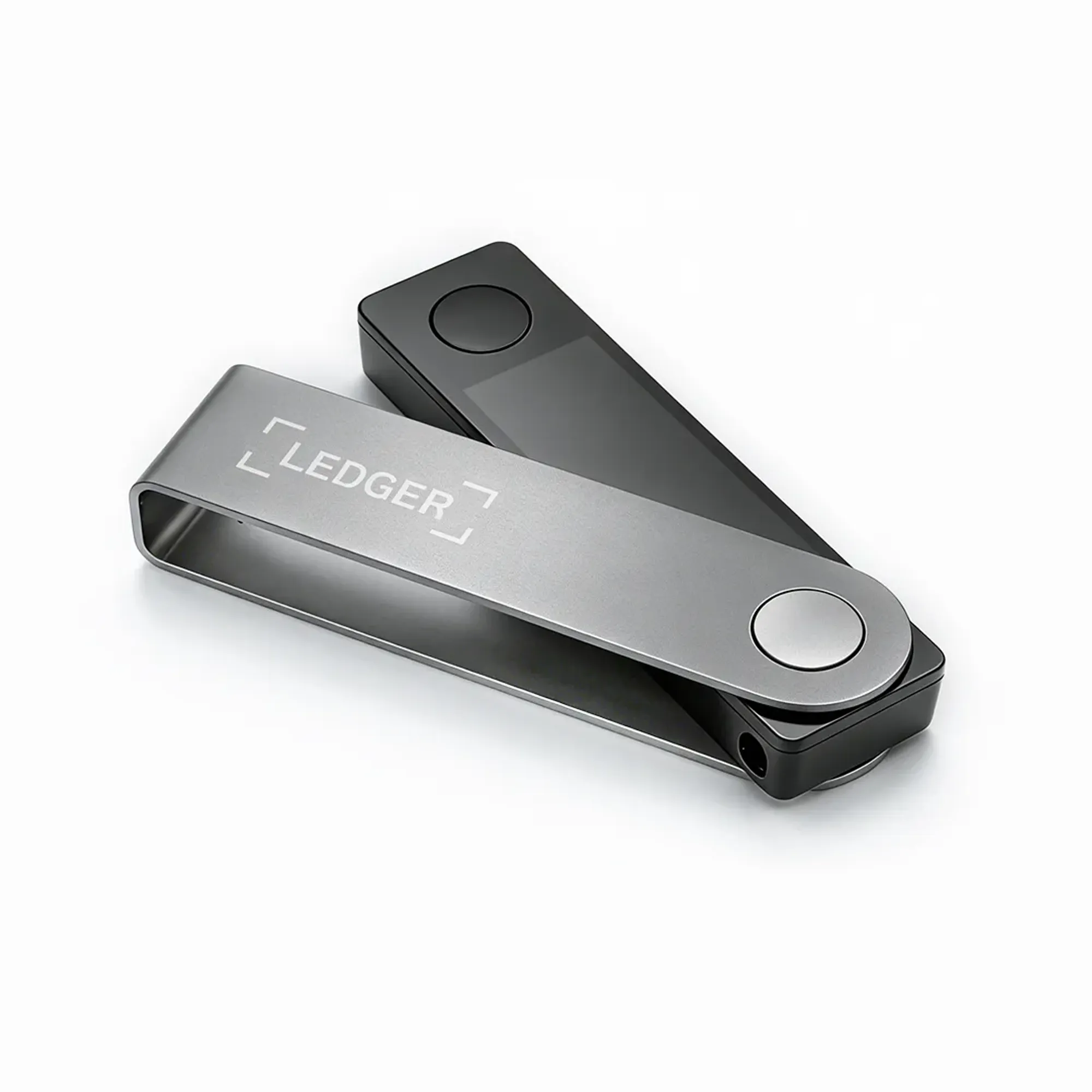
Before you buy a “factory sealed” Ledger wallet, check three things. The shrink wrap is continuous, with no re-taped edges or bubbling. The seller can point to where the edition actually came from - an announcement, a partner post, an official listing. And you’re buying from someone who shows their sourcing, not just claiming “sealed” in the title. None of these prove anything in isolation. Together, they’re the difference between a real collector’s item and a used device re-shrink-wrapped to look untouched.
What “factory sealed” actually means
“Factory sealed” means the device left Ledger’s (or a partner’s) packaging line and has never been opened since. It’s a claim about history, not a feature you can test on the device itself - a resealed box and a genuine one can look identical in a low-resolution photo. That’s exactly why the seal alone isn’t the whole check. It’s one input, not the verdict.
Ledger devices themselves don’t carry a visible “authenticity sticker” the way some retail electronics do. What you’re actually verifying is a chain of custody: who had it, since when, and whether anyone had a chance to open it in between.
Checks you can do before buying
Look at the seal itself, closely
Continuous shrink wrap has a consistent tension across every edge. Re-shrunk wrap tends to show one of a few tells: a seam that doesn’t quite meet, slightly cloudy patches from a second heat pass, or wrap that’s tight in some spots and loose in others. Ask for close-up photos of the corners and seams specifically, not just a straight-on box shot - that’s where a re-wrap is hardest to hide.
Ask where the edition came from
A real limited edition has a traceable origin: an event, a redemption program, a partner collaboration, an official Ledger release. If a seller can point to the announcement, a partner’s post, or Ledger’s own shop listing, that’s a real check. Open the link, read it, and decide if it matches the listing.
Tip
On this site, every listing that has a documented source lists it directly - the original announcement, event coverage, or an official shop page. If a listing doesn’t have one, we say so on the page instead of implying provenance we can’t back up.
Ask the seller directly, and see how they answer
“Where did this come from, and can you show me?” is a fair question for anyone selling a sealed collectible. A seller with a real, traceable item usually answers specifically - a date, an event, a program name. Vague answers (“just sealed, trust me”) aren’t proof of anything wrong, but they’re not proof of anything right either.
What happens after you buy: Ledger Live’s own check
Separately from anything you check before purchase, Ledger’s own software runs a device authenticity check the first time you connect a new device to Ledger Live and go through setup. It confirms the device’s secure element is genuine Ledger hardware running legitimate firmware - a cryptographic check, not a visual one. This happens after you’ve already bought the device, so it’s not a substitute for checking the listing first, but it’s a real, independent confirmation once you do decide to set it up.
Caution
If you’re buying purely for the sealed collectible - not planning to open and use it - running the Ledger Live check means breaking the seal, which ends the “factory sealed” condition. Decide which one you actually want before you connect it.
Red flags that mean it’s time to walk away
- The seller can’t or won’t say where the edition came from, beyond “limited edition” as a marketing phrase.
- Photos only ever show the same one or two angles, never close-ups of the seams or corners.
- The price is well under every other listing for the same edition, with no explanation.
- Pressure to buy immediately, before you’ve had a chance to ask questions or see more photos.
None of these alone means a listing is fake. Together, or even two at once, they’re worth pausing over.
Why buying from a documented collection matters
This is exactly the gap a properly documented collection closes. Every piece in our Ledger Collection came from Ledger’s own official channels or a publicly announced partner collaboration - never the resale market - and most listings link directly to their sources: the original announcement, press coverage, or Ledger’s own shop page. Where that trail is thinner, we say so on the listing instead of guessing at a history we can’t confirm. You can read the full sourcing story on About the Collection.
As one example, the Ledger Nano X Genesis Block Edition is identified by the circular “Genesis Block” medallion printed on the box. That box is part of Ledger’s original 2019 pre-order batch. Its own page lists its condition and sourcing notes, not just a “sealed” claim in the title.
The link above goes to our own Ledger collection - we disclose commercial links openly, same as our About page says.
Frequently asked questions
Can Ledger verify an edition’s authenticity for me before I buy it?
Not directly, no. Ledger Live’s genuine-device check happens after you’ve bought the device and connect it for setup - it confirms the hardware and firmware are legitimate, but it can’t tell you anything about a sealed box’s history before you open it. The before-purchase checks (seal condition, seller documentation) are what you have to go on until then.
Does a broken seal mean the device has been compromised?
No. A broken seal means you can’t verify the device was never opened - it doesn’t mean anything was actually done to it. If you’re buying to actually use the wallet, breaking the seal to run setup and the Ledger Live check is completely normal and doesn’t affect security. It only affects value as a sealed collectible.
What if a seller doesn’t have public sources for a rare edition?
Some genuinely rare editions were never well-documented publicly, even when they’re real. That’s not automatically a red flag on its own - but it does mean you’re relying more heavily on the seller directly, so the other checks (seal condition, how specifically they can answer questions) matter more, not less.